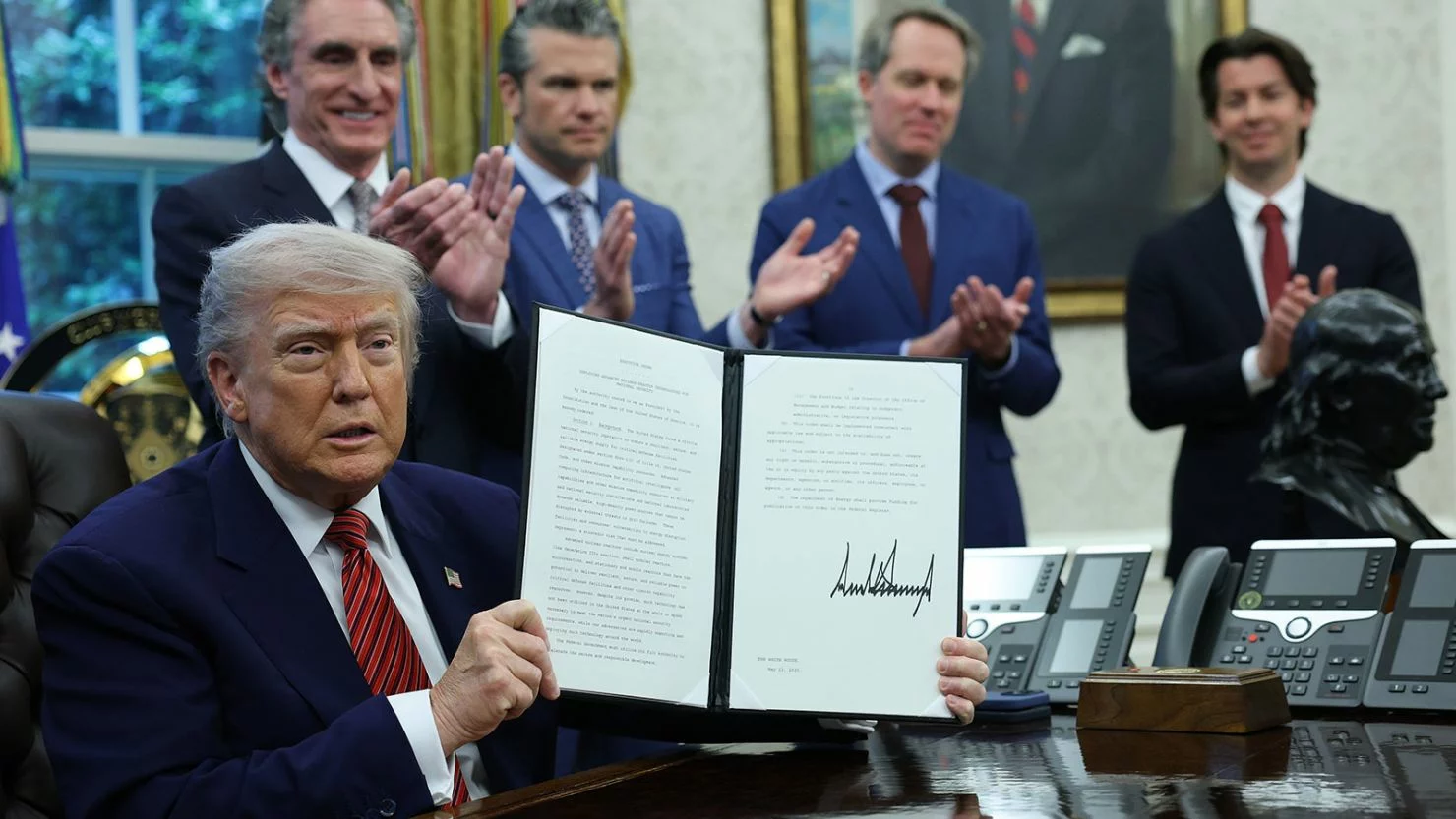


floriparesort.com – 23 June 2026 | Trump signs quantum orders to accelerate quantum adoption, boost cyber defense, marking a significant step forward for US leadership in the field. The move is aimed at cementing the US as the world leader in quantum technology, with the goal of developing a powerful quantum computer by 2028. The orders, signed by President Donald Trump, focus on accelerating quantum research, laying the groundwork for federal agencies to adopt the technology, and strengthening US defenses against cyberattacks.
The first order, titled ‘Ushering in the Next Frontier of Quantum Innovation,’ establishes the Quantum Computer for Application Development and Discovery Science (QC-ADDS) initiative. This directive requires the Department of Energy to identify technical requirements for an advanced quantum computer within 90 days and work toward deploying at least one such system at a federal research facility. Trump signs quantum orders, emphasizing the need for the US to stay ahead in the field, with the expectation of having a functioning machine by 2028.

The second order focuses on cybersecurity, setting a goal of migrating key government computing systems to post-quantum cryptography by 2030 or 2031. This is aimed at guarding against quantum-fueled cyberattacks, which could potentially break the encryption that currently secures financial networks, government infrastructure, and digital communications. As Trump signs quantum orders, the administration highlights the importance of protecting the nation’s quantum research from foreign spying, reflecting expectations that adversaries like China will increasingly target sensitive US quantum research.
The economic and geopolitical stakes are high, with the global competition in quantum technology intensifying. Consulting firm McKinsey has identified industries likely to see the earliest economic impact from quantum computing, estimating that the technology could add a combined $1.3 trillion in value by 2035. Trump signs quantum orders, building on groundwork laid during his first term, including the 2018 National Quantum Initiative Act, which helped organize federal quantum research across agencies.
The orders also have a counterintelligence dimension, tasking the FBI and intelligence community with better protecting the nation’s quantum research from foreign spying. As one expert noted, quantum is exactly the kind of target foreign intelligence services prioritize, since the talent pool is concentrated in a handful of universities and companies, sitting at the intersection of fundamental research and national security. With Trump signing quantum orders, the US aims to invest in American quantum leadership like never before, staying ahead of the pack in the race for dominance in the field.
In conclusion, Trump signs quantum orders to accelerate quantum adoption, boost cyber defense, and cement US leadership in quantum technology. The move marks a significant step forward for the US, with the goal of developing a powerful quantum computer by 2028 and migrating key government computing systems to post-quantum cryptography by 2030 or 2031. As the global competition in quantum technology intensifies, the US is investing in American quantum leadership, aiming to stay ahead of the pack and protect its national security interests.


![Google Introduces Feature That Lets Users Disable Watermarks [titlebase] on AI-Generated Media](https://www.floriparesort.com/wp-content/uploads/2026/08/google-introduces-feature-that-lets-users-disable-watermarks-titlebase-on-ai-generated-media.webp)
![Carrier Set for Replacement [titlebase]: Estonia's Tele2 Announces 2027 SIM Upgrade Deadline](https://www.floriparesort.com/wp-content/uploads/2026/08/carrier-set-for-replacement-titlebase-estonias-tele2-announces-2027-sim-upgrade-deadline.webp)
![Google Introduces Feature That Lets Users Disable Watermarks [titlebase] on AI-Generated Media](https://www.floriparesort.com/wp-content/uploads/2026/08/google-introduces-feature-that-lets-users-disable-watermarks-titlebase-on-ai-generated-media-630x380.webp)
![Carrier Set for Replacement [titlebase]: Estonia's Tele2 Announces 2027 SIM Upgrade Deadline](https://www.floriparesort.com/wp-content/uploads/2026/08/carrier-set-for-replacement-titlebase-estonias-tele2-announces-2027-sim-upgrade-deadline-630x380.webp)