


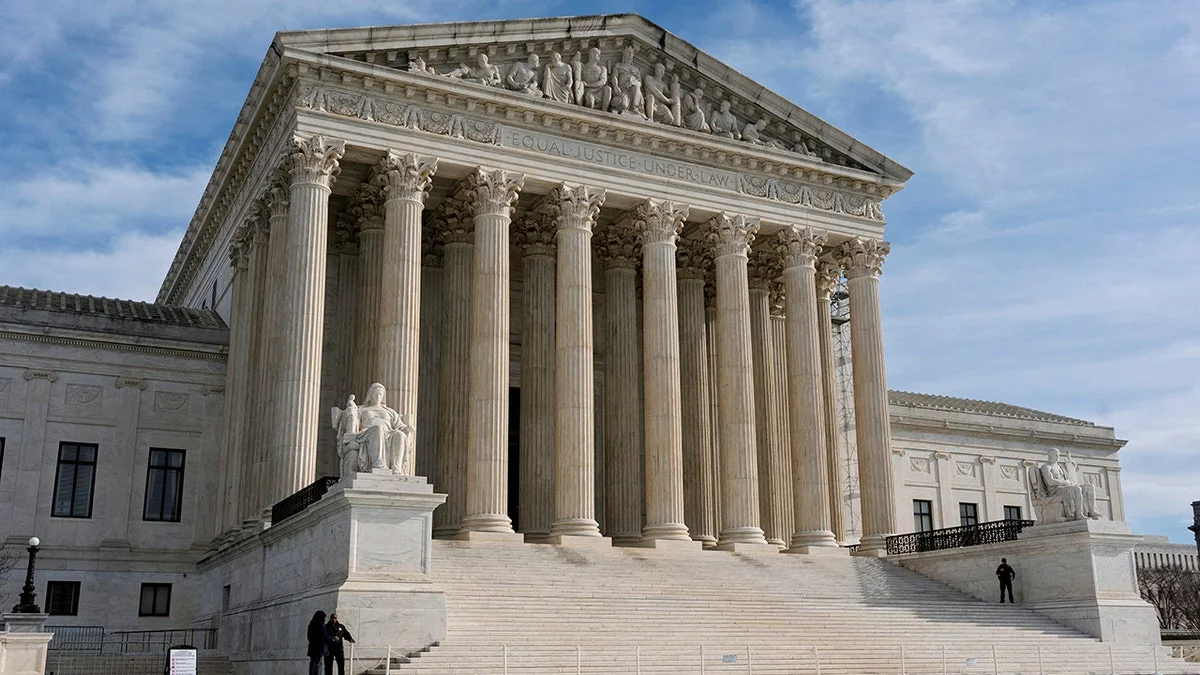


floriparesort.com – 29 May 2026 | SCOTUS upholds bias claim in a recent landmark ruling, marking a significant step against racial discrimination in the United States. The Supreme Court’s decision has been hailed as a small victory against racial discrimination, with the court acknowledging that race still matters, at least in the context of the criminal justice system. The case in question involved Terry Pitchford, a Black man on Mississippi’s death row, who was convicted of capital murder for his role in a deadly grocery store robbery when he was a teenager. The prosecutor in the case, Doug Evans, had a history of striking Black jurors in criminal cases involving Black defendants, which led to allegations of racial bias in the jury selection process.
The Supreme Court’s ruling in this case is a significant development in the ongoing struggle against racial discrimination in the United States. The court’s decision was written by Justice Brett Kavanaugh, who was joined by Chief Justice John Roberts Jr. and the court’s three Democratic appointees: Justices Sonia Sotomayor, Elena Kagan, and Ketanji Brown Jackson. The ruling emphasizes the importance of ensuring that the jury selection process is fair and unbiased, and that defendants are not subjected to racial discrimination in the pursuit of justice.

SCOTUS upholds bias claim in this case, and the ruling has been welcomed by civil rights advocates, who see it as a major step forward in the fight against racial discrimination. However, the ruling has also been criticized by some, who argue that it does not go far enough in addressing the systemic issues that contribute to racial bias in the justice system. As the nation continues to grapple with the complex and deeply ingrained issues of racial discrimination, the Supreme Court’s ruling in this case is a significant step in the right direction.
In another development, the Supreme Court has also upheld the constitutional validity of the Special Intensive Revision (SIR) of the electoral rolls, which is aimed at ensuring the accuracy and integrity of the electoral process. The court’s ruling in this case emphasizes the importance of ensuring that the electoral process is fair and transparent, and that all citizens have an equal opportunity to participate in the democratic process.
SCOTUS upholds bias claim and the SIR of electoral rolls, and these rulings have significant implications for the future of democracy in the United States. As the nation continues to evolve and grow, it is essential that the justice system and the electoral process are fair, transparent, and free from racial bias. The Supreme Court’s rulings in these cases are an important step towards achieving these goals, and they will have a lasting impact on the nation’s progress towards a more just and equitable society.
Furthermore, SCOTUS upholds bias claim in a manner that highlights the importance of addressing the root causes of racial discrimination. The court’s ruling in this case emphasizes the need for a more nuanced and multifaceted approach to addressing racial bias, one that takes into account the complex and deeply ingrained issues that contribute to this problem. By acknowledging the significance of racial bias in the justice system and the electoral process, the Supreme Court’s ruling in this case is a significant step towards creating a more just and equitable society.
In conclusion, SCOTUS upholds bias claim in a landmark ruling that has significant implications for the future of democracy in the United States. The court’s decision in this case is a major step forward in the fight against racial discrimination, and it emphasizes the importance of ensuring that the justice system and the electoral process are fair, transparent, and free from racial bias. As the nation continues to evolve and grow, it is essential that the justice system and the electoral process are adapted to meet the changing needs of society, and that they are guided by the principles of justice, equality, and fairness.

![US Supreme Court Rejects School Flyer Case [titlebase] in Landmark Free Speech Decision](https://www.floriparesort.com/wp-content/uploads/2026/06/us-supreme-court-rejects-school-flyer-case-titlebase-in-landmark-free-speech-decision-60x60.webp)



![Judge orders new names [titlebase]: Virginia County Ordered to Replace Confederate Names](https://www.floriparesort.com/wp-content/uploads/2026/08/judge-orders-new-names-titlebase-virginia-county-ordered-to-replace-confederate-names.webp)


![Judge orders new names [titlebase]: Virginia County Ordered to Replace Confederate Names](https://www.floriparesort.com/wp-content/uploads/2026/08/judge-orders-new-names-titlebase-virginia-county-ordered-to-replace-confederate-names-630x380.webp)